Hibah: The Law of Gifts in Imam al-Nawawi’s Minhaj al-Talibin
Part 2: Transactions (Mu’amalat) – Gifts (Hibah)
Part of a series on the structure of Minhaj al-Talibin, the classical Shafi’i legal manual. Section 18 of Part 2 (Transactions).
Introduction
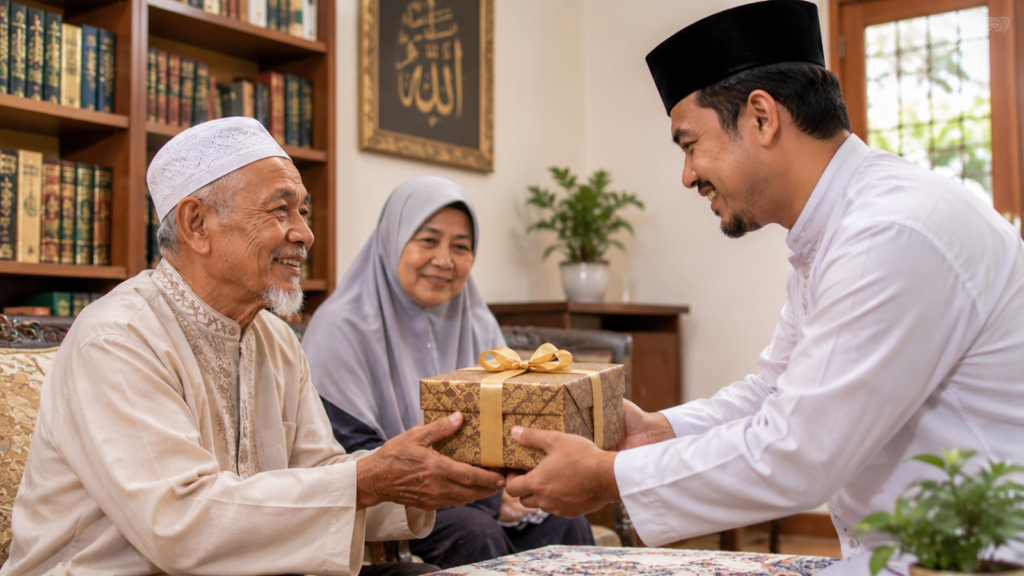
After the Book of Endowment, Imam al-Nawawi (631–676 AH / 1233–1277 CE) presents the Book of Gifts (Kitab al-Hibah). A gift is the transfer of ownership of property from one person to another, during the giver’s lifetime and without compensation. It is the opposite of a sale, where something is given in exchange for something else, and it differs from a bequest, which takes effect only after death. The tradition praises giving as a means of building affection. A well-known report relates that the Prophet encouraged people to exchange gifts so that they would love one another.
The book also covers related forms of giving that differ in motive. A hibah in the general sense is a gift, a hadiyyah is a present given to honor the recipient or to express affection, and a sadaqah is a gift given for the reward of the Hereafter, usually to someone in need. The legal rules are largely the same for all three. This article follows the main themes of the book in the general order of the Minhaj.
1. The pillars of a gift
The book identifies the elements of a valid gift as the wording, the giver, the recipient, and the thing given. The wording consists of an offer and acceptance, such as “I have given you this book” and “I accept.” The giver must be competent to dispose of property freely, meaning that he is mature, sane, and not under restriction, and he must own what he gives. The recipient must be capable of owning property. A gift to a minor or an incompetent person is accepted on their behalf by a guardian.
2. What may be given
Any property that can lawfully be owned and transferred may be given. This includes land, goods, animals, and money. The thing given need not be known in detail, as long as it is not so uncertain that it leads to disputes. A gift of something that cannot be owned, such as a free person or an impure item, is invalid. The school also treats the gift of a debt. A gift of a debt to the debtor himself is valid and operates as a release (ibra’), while questions about giving a debt to a third person are treated according to the school’s rules on the transfer of debts.
3. Possession and the completion of the gift
A central rule of the book is that a gift does not complete its transfer of ownership until the recipient takes possession (qabd), with the permission of the giver. Before that, the giver may withdraw, and if he dies, the gift is not completed, and the item passes to his heirs. The school relies on the report about the Companion Abu Bakr, who had intended to give his daughter ‘A’ishah a grove of palm trees but had not handed it over before his death, and said that if she had taken possession of it, it would have been hers.
The book explains what counts as possession for different types of property. For land and buildings, it means vacating them and giving the recipient control. For goods, it means handing them over or placing them at the recipient’s disposal. For a minor, the father or guardian may take possession on his behalf, even when the father is himself the giver, since he can act for both sides.
4. Conditions and time limits
A gift is generally a gift of the thing itself, with no stipulation that cuts against ownership. A stipulation that the recipient must return the item at a certain time, or that the giver may take it back at will, undermines the gift. The book treats two special forms that were known in early practice:
- ‘Umra: a gift made for the lifetime of the recipient, such as “I give you this house for your life.” The school holds that it is valid and that the gift belongs to the recipient and passes to his heirs, and the condition limiting it to his lifetime is disregarded.
- Ruqba: a gift stated to belong to the recipient if the giver dies first. The school discusses its validity and gives rules on the matter.
The school also addresses a gift made with a condition that the recipient give something in return. Such a gift is treated as a sale, and the rules of sale apply to it.
5. Taking back a gift
In general, a giver may not take back what he has given once it has been received. A report from the Prophet states that a person who takes back his gift is like a dog returning to its vomit, which expresses strong disapproval. The book makes one exception, based on another report: a father, and by extension a grandfather, may take back what he has given to his child. The school discusses the conditions under which the parent may do so, such as when the item is still owned by the child and has not been sold or otherwise transferred. This exception reflects the parent’s special position, and the school explains that it is not available to other relatives.
6. Fairness among children
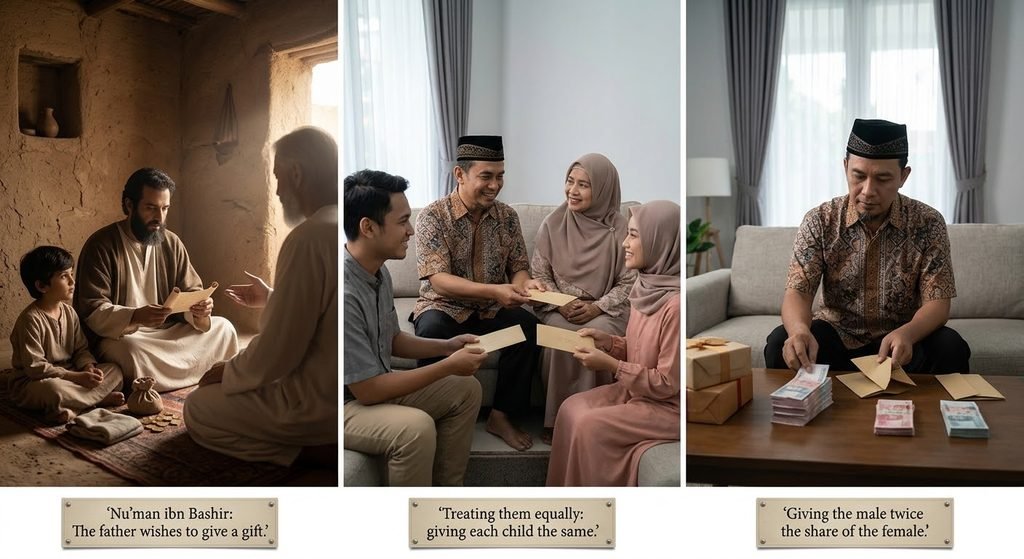
Al-Nawawi addresses the question of a parent who gives gifts to his children. The school recommends treating them equally, and regards it as disliked to favor one without a good reason. This is based on the report of Nu’man ibn Bashir, whose father wished to give him a gift and was told by the Prophet to be fair among his children. The book explains that equality means giving each child the same, or, according to a view in the school, giving the male twice the share of the female, in accordance with the rule of inheritance. If a parent does favor one child, the gift is still valid, though disliked, according to the relied-upon position.
7. Gifts in a fatal illness
A gift made by a person who is in a fatal illness is treated differently. Since such a person’s property will soon pass to his heirs, the school restricts such gifts to one third of the estate, in the same way as bequests, unless the heirs agree to more. This rule protects the heirs while still allowing the dying person to be generous.
8. Disputes
The book ends with the common disputes about gifts. If the giver says that he lent the item and the recipient says that it was given, the school gives rules about who is believed and what evidence is needed. If there is a disagreement over whether possession took place, the burden is on the one who claims it. The school also discusses a person who gives a gift under compulsion or in circumstances in which his consent was not real, in which case the gift is not valid.
Why the order matters
The book begins with the pillars and the things that can be given, then moves to the central rule of possession, which is what distinguishes a completed gift from a mere promise. It then covers the special forms of gift, the question of taking a gift back, and the ethics of fairness among children. It ends with the limits imposed by illness and with disputes. This order moves from the formation of the contract to its completion to its limits, and shows how the law protects both generosity and the rights of others.
Closing reflection
For al-Nawawi, the law of gifts shows how the tradition encourages generosity while giving it a clear structure. The requirement of possession protects the recipient from vague promises and the giver from claims that arise after his death. The rule against taking gifts back guards the dignity of the gift. And the call for fairness among children reminds the reader that generosity within the family should not become a cause of resentment. The result is a body of law that supports the affection the prophetic report hopes to build.
Note: This article summarizes the general Shafi’i position as presented in Minhaj al-Talibin. Details, including the status of the ruqba and the manner of equality among children, differ among the schools and can vary between editions and commentaries. Readers who need a precise ruling should consult a qualified teacher or scholar.